Among the many traditions that define the identity of the Asante people, the Akwasidae Festival occupies a special place.
Observed as part of the traditional Adae cycle, Akwasidae brings together the Asantehene, traditional rulers, queen mothers, elders, communities and visitors in an important celebration of Asante history, ancestry, kingship and cultural identity.
In Kumasi, major Akwasidae celebrations are closely associated with Manhyia Palace, the seat of the Asantehene. On such occasions, the palace becomes a magnificent centre of Asante royal tradition, filled with colourful kente, gold regalia, traditional umbrellas, drumming, horn blowing and the gathering of chiefs from across Asanteman.
To a first-time visitor, Akwasidae may appear to be a spectacular royal festival. But behind the colour and pageantry is something much deeper.
Akwasidae is an expression of memory, identity, traditional authority, spirituality and continuity.
To understand Akwasidae is to understand something fundamental about Asanteman itself.
What Is Akwasidae?
Akwasidae is an important observance within the traditional Asante calendar and forms part of the wider Adae cycle.
Unlike festivals that take place only once every year, Akwasidae recurs according to the traditional calendar. It falls on a Sunday within the Adae cycle, while the related Awukudae observance falls on a Wednesday.
The name itself reflects this connection with Sunday. In Twi, Sunday is Kwasiada.
Akwasidae therefore provides recurring occasions for Asante traditional institutions and communities to reconnect with their history, ancestors and traditional leadership.
Some celebrations are larger and more elaborate than others, particularly when an Akwasidae coincides with an important royal or historical occasion.
It is important to understand that Akwasidae is not simply a cultural show created for tourists. Its significance is deeply rooted in Asante traditional and spiritual institutions.
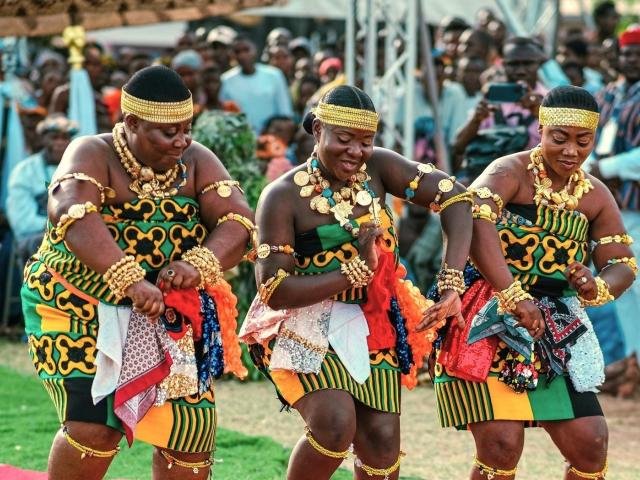
A Festival Rooted in Asante History
The significance of Akwasidae cannot be separated from the history of the Asante Kingdom.
The Asante state developed around a sophisticated system of traditional authority, with the Asantehene serving as the central figure of the Asante union.
But Asante kingship has historically represented more than political administration.
It is connected with ancestry, spirituality, custom, leadership and the collective identity of the Asante people.
At the centre of this identity is the Golden Stool — Sika Dwa Kofi.
According to Asante tradition, the Golden Stool represents the soul and unity of Asanteman. It does not simply belong to an individual Asantehene. Rather, the Asantehene serves the institution and the people represented by the Golden Stool.
Traditional observances such as Akwasidae help preserve these relationships between the people, their ancestors, their traditional leaders and their collective heritage.
Generations change. Cities grow. Political systems evolve. Technology transforms everyday life.
Yet Akwasidae continues to provide a moment in which Asanteman remembers its history and publicly expresses its identity.
Akwasidae and the Adae Cycle
Akwasidae forms part of the broader Adae tradition.
Within the traditional cycle are observances including Awukudae, associated with Wednesday, and Akwasidae, associated with Sunday.
These are more than dates on a calendar.
They are occasions connected with traditional responsibilities, remembrance of ancestors and the institutions of chieftaincy.
Akwasidae is particularly visible to the wider public because major observances can involve large royal gatherings and public ceremonies.
Understanding this distinction is important.
Although Akwasidae has become an important attraction for cultural tourism, its origins and significance are rooted in Asante tradition rather than tourism.
The Asantehene at Akwasidae
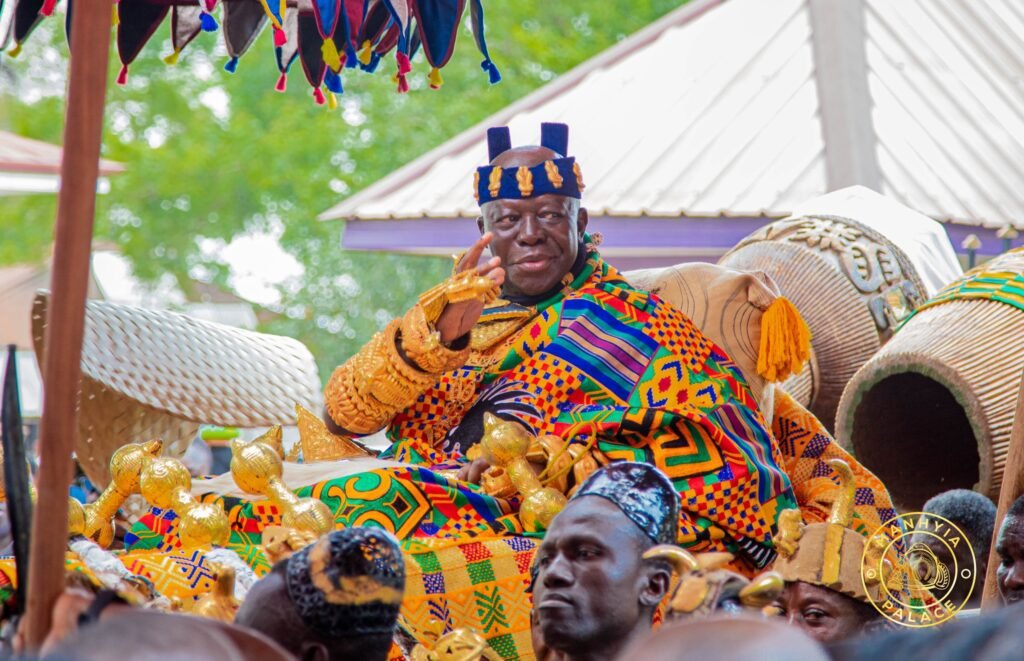
At the centre of major Akwasidae celebrations is the Asantehene, the traditional ruler of Asanteman.
During public ceremonies, the Asantehene may receive homage from chiefs and delegations who have travelled from different parts of Asanteman.
This gathering provides a visible representation of the traditional structure of Asante society.
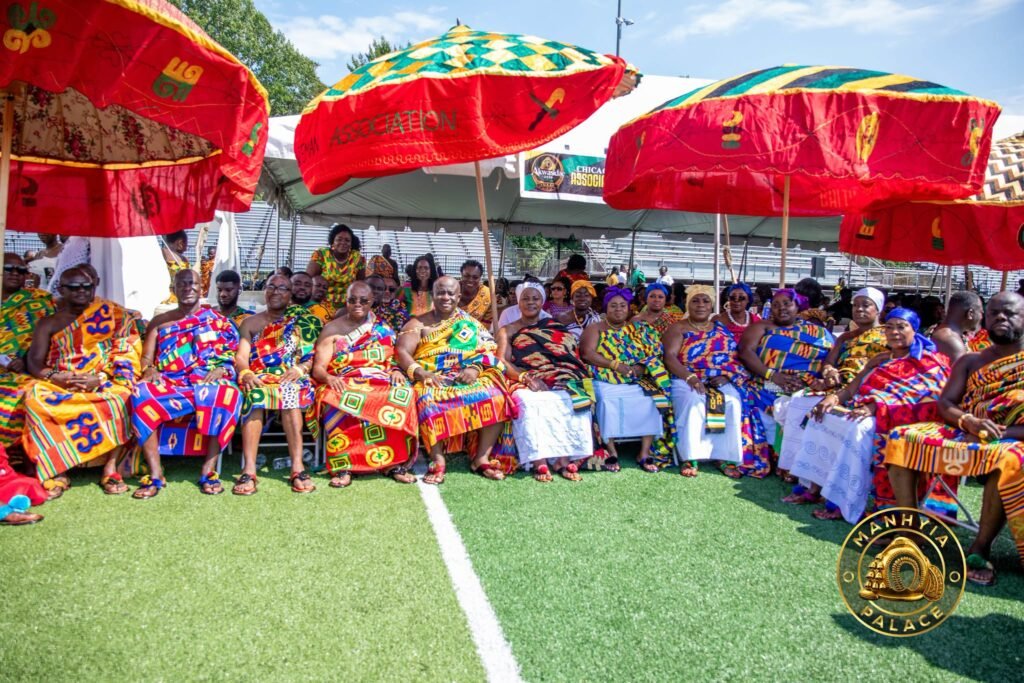
Chiefs do not simply attend as individuals. They represent stools, towns, divisions and communities, many of which have their own histories and responsibilities within the larger Asante traditional system.
The ceremony therefore becomes a living representation of Asante traditional governance.
What may appear to an unfamiliar observer as a gathering of beautifully dressed chiefs is actually a complex cultural institution being expressed publicly.
Manhyia Palace: The Heart of the Celebration
For many people today, Akwasidae is inseparably associated with Manhyia Palace in Kumasi.
Kumasi has long been the political and cultural heart of Asanteman, and Manhyia remains the seat of the Asantehene.
During major Akwasidae celebrations, the palace grounds can become one of the most remarkable displays of traditional culture in Ghana.
Chiefs and their entourages arrive dressed in elaborate traditional cloth. Large ceremonial umbrellas accompany important traditional figures. Drummers perform. Horns sound. Linguists carry staffs of office. Queen mothers and other traditional leaders take their places.
Gold ornaments and traditional symbols of authority can be seen throughout the gathering.
For those moments, Manhyia becomes more than a palace.
It becomes a place where centuries of Asante history are brought into the present.
For anyone seeking to understand Kumasi beyond its modern roads, markets, businesses and buildings, Akwasidae offers a window into the city’s deeper identity.
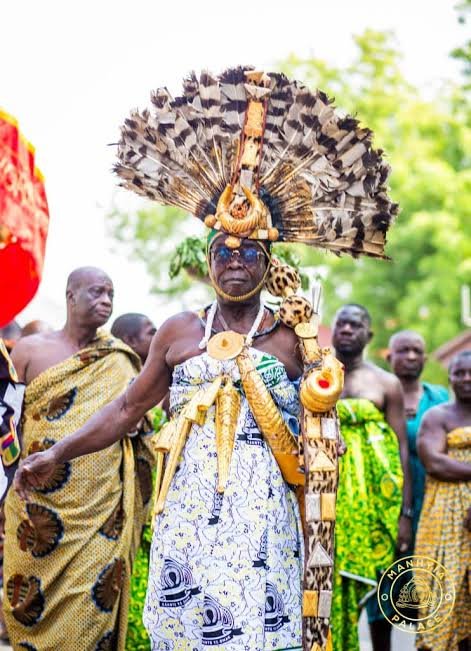
Paying Homage to the Asantehene
One of the important public features associated with Akwasidae is the paying of homage.
Traditional leaders and delegations approach the Asantehene according to established custom and protocol.
These actions communicate respect, loyalty and recognition of traditional authority.
To an outsider, some of the movements and procedures may appear purely ceremonial. Within the Asante traditional system, however, they carry meaning.
How delegations approach, where chiefs sit, who speaks and how greetings are performed can all be influenced by custom, hierarchy and historical relationships.
Asante royal ceremony has developed over generations, and many elements carry meanings that may not be immediately obvious to a first-time visitor.
Remembering the Ancestors
Ancestral remembrance is fundamental to understanding Akwasidae and many other Asante traditions.
Asante society has a strong historical consciousness.
The past is not regarded simply as something that has disappeared. Previous generations, ancestral stools, historical events and the people who shaped Asanteman remain important to the identity and responsibilities of the living.
Adae observances provide opportunities to remember those who came before.
This is one reason Akwasidae should never be reduced simply to its colourful appearance.
The public celebration is the visible expression of a tradition with much deeper historical and spiritual foundations.
Akwasidae connects today’s generation with generations that came before them.
Kente and Royal Dress
One of the most striking sights during Akwasidae is the clothing.
Chiefs, queen mothers and other participants may appear in elaborate traditional cloth, particularly kente.
Kente is much more than colourful fabric.
Different patterns, colours and designs may carry names, associations and meanings. Historically, particular forms of cloth have also been associated with prestige, status and royal life.
During Akwasidae, the variety of cloth worn by traditional leaders creates one of the most impressive displays of Asante textile heritage.
The way the cloth is worn also forms part of the visual language of the occasion.
Visitors may initially be attracted by the colours, but behind them lies a rich history of craftsmanship, symbolism and identity.
Gold and Asante Royal Culture
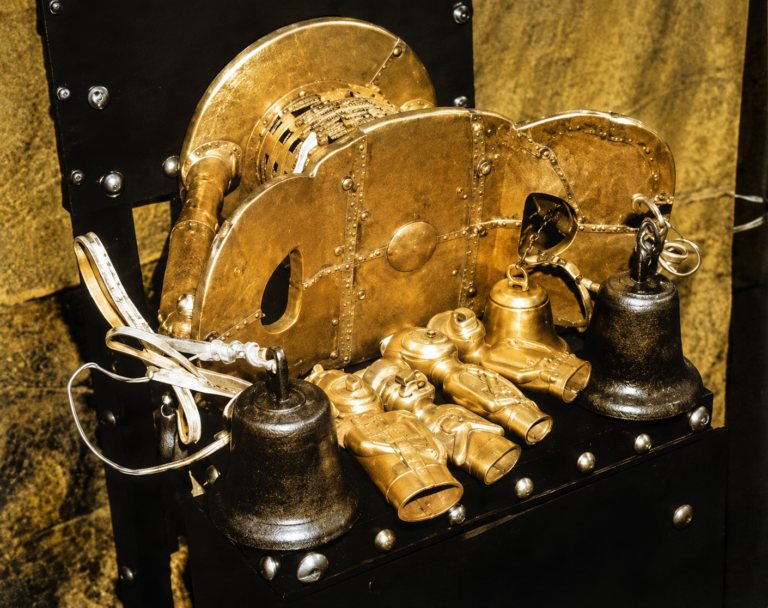
Gold has occupied an important place in Asante history for centuries.
The territories associated with Asanteman contain significant gold resources, and gold became closely connected with trade, wealth, political authority and royal culture.
During major traditional ceremonies, gold ornaments may be prominently displayed.
Chiefs and royals can be seen wearing elaborate gold pieces, while ceremonial objects may also feature gold decoration.
These displays should not be understood merely as demonstrations of personal wealth.
They reflect a much longer history in which gold became embedded within Asante ideas of prestige, leadership, power and royal symbolism.
At Akwasidae, this historical relationship becomes visible.
The Meaning of the Traditional Umbrellas
Another unmistakable feature of Akwasidae is the presence of large traditional umbrellas.
These beautifully decorated umbrellas are often positioned above chiefs and important traditional figures.
They are more than protection from the sun.
Within the ceremonial setting, they can function as symbols of office, dignity and status.
A large gathering of chiefs therefore creates a remarkable scene, with colourful umbrellas rising above the crowd and moving with the various traditional delegations.
They have become one of the most recognisable visual features of Asante royal ceremonies.
Drumming, Horns and Traditional Music
Akwasidae is not only something to see.
It is something to hear.
Traditional drumming, horn blowing and other musical performances contribute enormously to the atmosphere of the occasion.
Within Asante culture, drums can communicate far more than rhythm.
Traditional musical patterns can be connected with praise, proverbs, royal history, communication and ceremonial functions.
Horn blowers also form an important part of Asante royal ceremonial tradition.
The sounds, movement, clothing and symbols combine to create an experience deeply rooted in Asante heritage.
Queen Mothers and Traditional Leadership
The institution of the queen mother, or Ohemaa, is another important part of Asante traditional governance.
Queen mothers are not simply ceremonial female counterparts to chiefs.
They occupy recognised positions within the traditional system and have historically played important roles in leadership, family lineage, community affairs and processes surrounding the selection of traditional rulers according to the customs of particular stools.
Their presence at important traditional gatherings is therefore significant.
Understanding Akwasidae also means recognising that Asante traditional authority involves a network of chiefs, queen mothers, elders, linguists and other traditional office holders.
The Okyeame and the Linguist Staff
Visitors may also notice individuals carrying elaborately decorated staffs during royal ceremonies.
These are often associated with the Okyeame, or traditional linguist.
The Okyeame occupies an important position in Akan and Asante traditional communication and court protocol.
In many formal situations, communication with a chief is conducted through the linguist rather than directly.
The linguist staffs themselves often incorporate symbolic designs representing proverbs, historical lessons or principles of leadership.
They demonstrate an important feature of Asante culture: complex ideas can be communicated not only through words, but also through symbols.
Akwasidae Is Living Culture
Perhaps one of the most important things to understand about Akwasidae is that it represents living culture.
Asante culture is not confined to museums, history books or old photographs.
Traditional institutions continue to function alongside the institutions of modern Ghana.
People who use smartphones, run modern businesses, attend universities, work in contemporary professions and travel internationally may simultaneously maintain strong relationships with their traditional institutions.
Akwasidae demonstrates how these worlds coexist.
Centuries-old traditions are now photographed on smartphones and shared instantly across social media.
Royal ceremonies can be livestreamed to audiences around the world.
Traditional leaders may receive delegations that include business leaders, politicians, academics, diplomats, tourists and members of the diaspora.
Akwasidae therefore shows that cultural continuity does not necessarily mean rejecting modernity.
Akwasidae and Tourism in Kumasi
Akwasidae has increasingly attracted visitors from other parts of Ghana and around the world.
For cultural tourists, it provides an opportunity to experience aspects of Asante royal tradition that photographs and museum displays alone cannot fully communicate.
The festival also connects naturally with Kumasi’s wider heritage attractions.
Someone visiting Kumasi because of Akwasidae may also be interested in exploring places associated with Asante history, including Manhyia Palace, the Prempeh II Jubilee Museum, the Kumasi Fort and Military Museum, the Komfo Anokye Sword Site, as well as traditional craft communities across the Ashanti Region.
This makes Akwasidae important to Kumasi’s potential as a major cultural tourism destination.
Kumasi is often recognised as one of Ghana’s great commercial centres, but the city is also the historic heart of one of West Africa’s most influential traditional kingdoms.
Akwasidae makes that heritage visible.
Akwasidae and the Asante Diaspora
The cultural importance of Akwasidae extends far beyond the Ashanti Region.
Asante communities can be found throughout Ghana and across the world.
For people living away from their ancestral communities, important traditional occasions can provide opportunities to reconnect with their heritage and identity.
Digital media has expanded this connection considerably.
Photographs, videos and livestreams from Manhyia can now reach audiences across Africa, Europe, North America and elsewhere almost instantly.
A ceremony taking place in Kumasi can therefore become a global cultural moment.
This international visibility continues to introduce new audiences to Asante culture while maintaining the festival’s roots within Asanteman.
Why Akwasidae Still Matters
Akwasidae has endured because the ideas it represents continue to matter.
It connects generations.
It preserves historical memory.
It reinforces traditional institutions.
It creates a space for cultural knowledge to be displayed and passed on.
It brings together people from different communities under a shared heritage.
Perhaps most importantly, Akwasidae demonstrates that tradition does not necessarily have to disappear as society modernises.
Kumasi today is a growing modern African city. Its people build businesses, attend universities, create technology, participate in global markets and engage with the world.
At the same time, Kumasi remains the historic heart of Asanteman.
Akwasidae brings these realities together.
Experiencing Akwasidae as a Visitor
For visitors, experiencing Akwasidae can be one of the most memorable cultural experiences in Kumasi.
However, visitors should remember that the occasion is first and foremost a traditional and cultural observance, rather than simply a tourist performance.
Respectful behaviour is therefore important.
Visitors should dress appropriately and follow instructions given by palace officials or organisers. Photography may be possible in public areas, but restrictions surrounding particular people, objects or ceremonies should always be respected.
Because Akwasidae follows the traditional calendar and arrangements can vary, anyone planning to attend should confirm the relevant date, venue and public-access arrangements before travelling.
Quick Facts About Akwasidae
Traditional Name: Akwasidae
People: Asante
Region: Ashanti Region, Ghana
Principal City: Kumasi
Royal Association: The Asantehene and Asanteman
Major Venue: Manhyia Palace
Traditional Cycle: Adae
Day: Sunday within the traditional cycle
Cultural Themes: Ancestry, kingship, remembrance, unity, traditional authority and heritage
Known For: Royal regalia, kente, gold ornaments, traditional umbrellas, drumming, horn blowing and the gathering of chiefs and queen mothers
Explore More Asante Culture
Akwasidae opens the door to many other fascinating aspects of Asante history and culture.
Explore the stories of the Golden Stool (Sika Dwa Kofi), Manhyia Palace, Okomfo Anokye, Otumfuo Osei Tutu I, Yaa Asantewaa, Adinkra symbols, Kente weaving, Asante chieftaincy, queen mothers and the traditional Adae calendar.
Each forms part of a much larger story about the people, institutions and traditions that shaped Asanteman.
A Tradition Connecting the Past and Present
The continued observance of Akwasidae demonstrates the strength of cultural memory within Asanteman.
But preserving a tradition involves more than repeating ceremonies.
It also requires documenting its history, teaching younger generations and ensuring that its meaning is not lost when it is presented to new audiences.
As Kumasi continues to grow and modernise, traditions such as Akwasidae provide an important connection between the modern city and the generations that shaped it.
Akwasidae reminds us that Kumasi is not simply a place on a map.
It is the historic heart of Asanteman — a place where centuries of history, kingship, craftsmanship, spirituality and tradition continue to influence everyday identity.
For Asanteman, Akwasidae is therefore much more than a colourful celebration.
It is an expression of identity, continuity, remembrance and belonging.
And for anyone seeking to understand Asante culture, Akwasidae remains one of the most powerful places to begin.
22 views